



Arcanova Tarot
A digital reading needed more than cards and definitions. It needed a sequence with a pause in it.
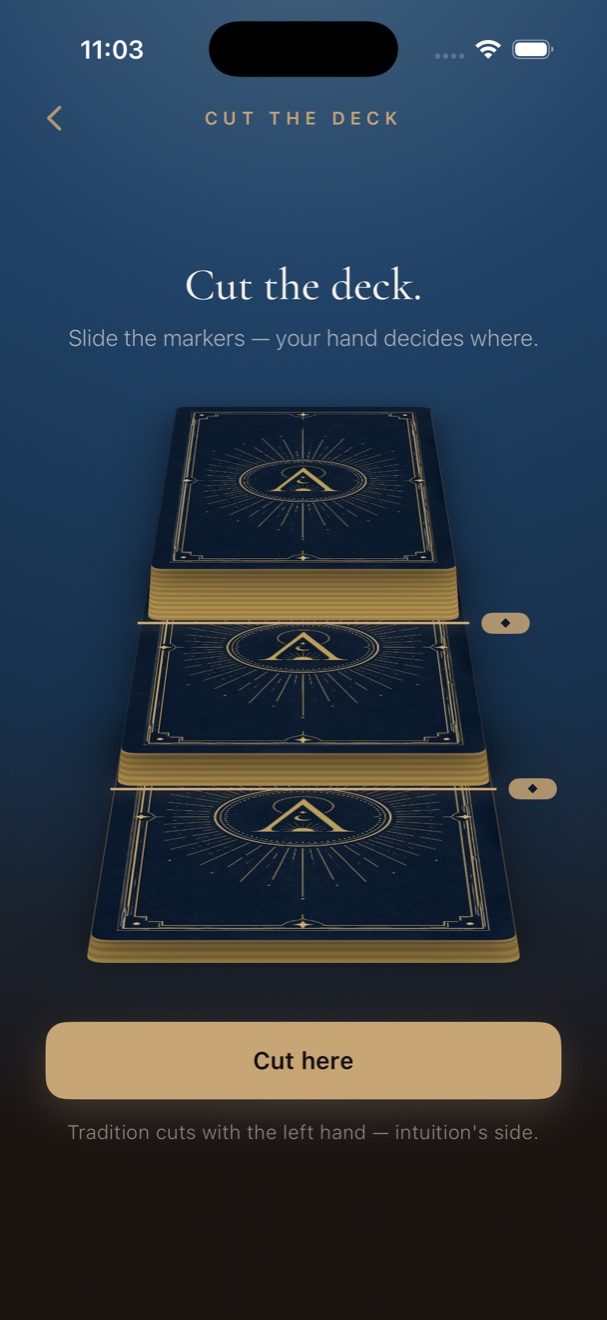 iPhone / Cut the deck
 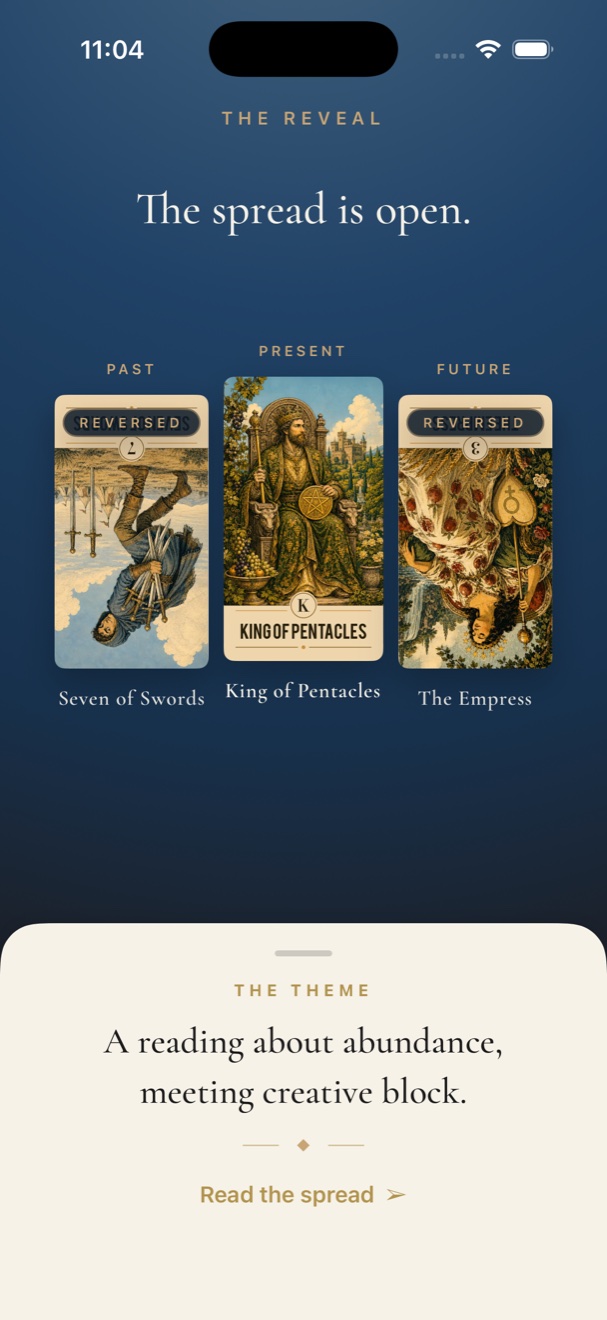 iPhone / Reveal
 Working pre-release app for iPhone and iPad.
01 / Why it exists
Arcanova began with Neil’s own interest in tarot. He wanted to see how the traditional 78-card system could become a thoughtfully designed digital experience, one that felt reflective rather than predictive or game-like.
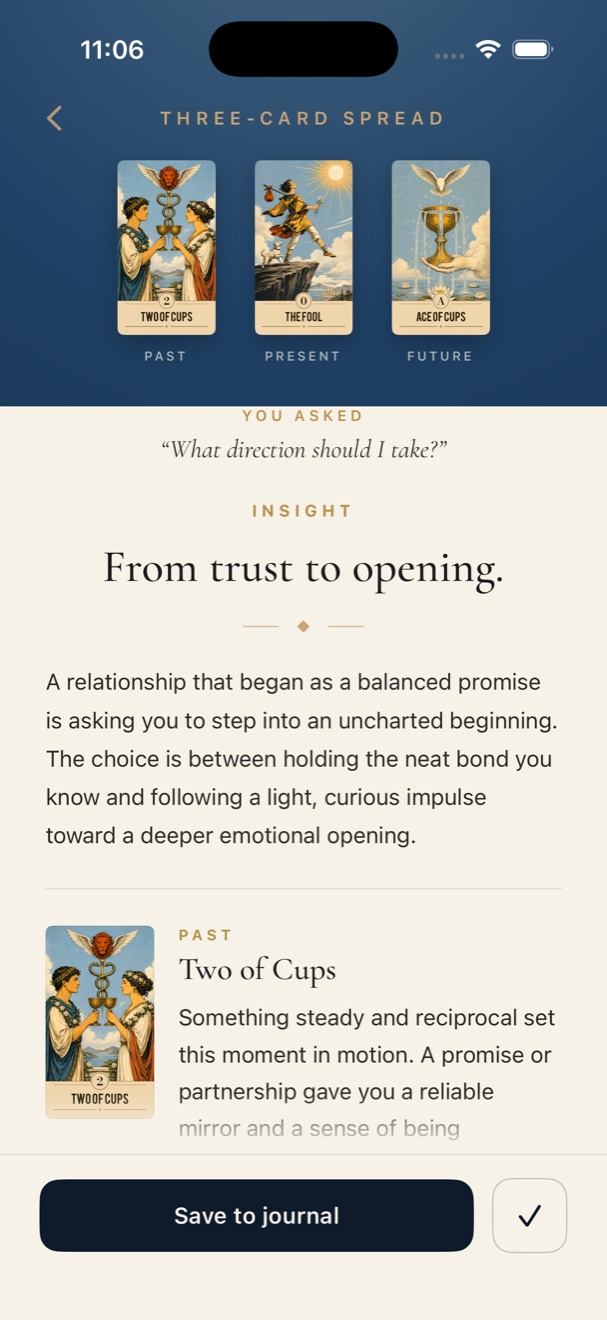
That meant designing the moments around an answer: grounding, choosing a spread, shuffling, cutting, drawing, revealing, reading and optionally recording a private note. The interface also had to hold the complete card content and long-form readings without slipping into visual clutter.
02 / Evidence in the work
The sequence makes room for a pause.
Screens and artefacts from the project itself. Each caption explains what it shows.
03 / Designing the ritual
Designing the ritual
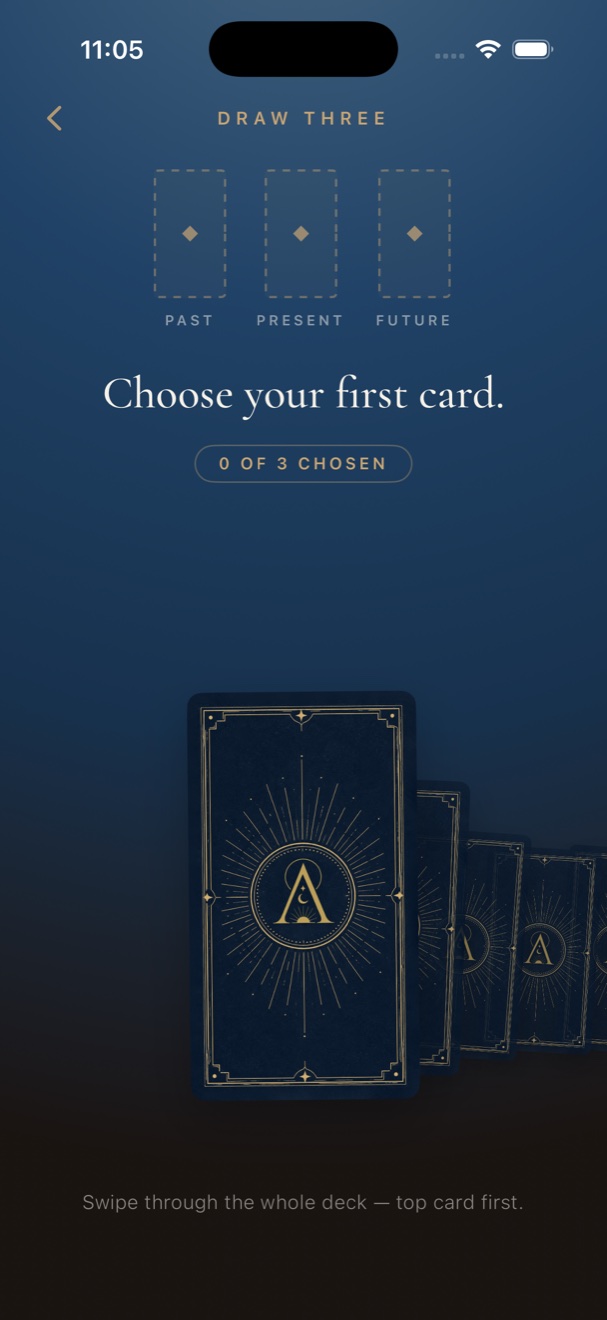
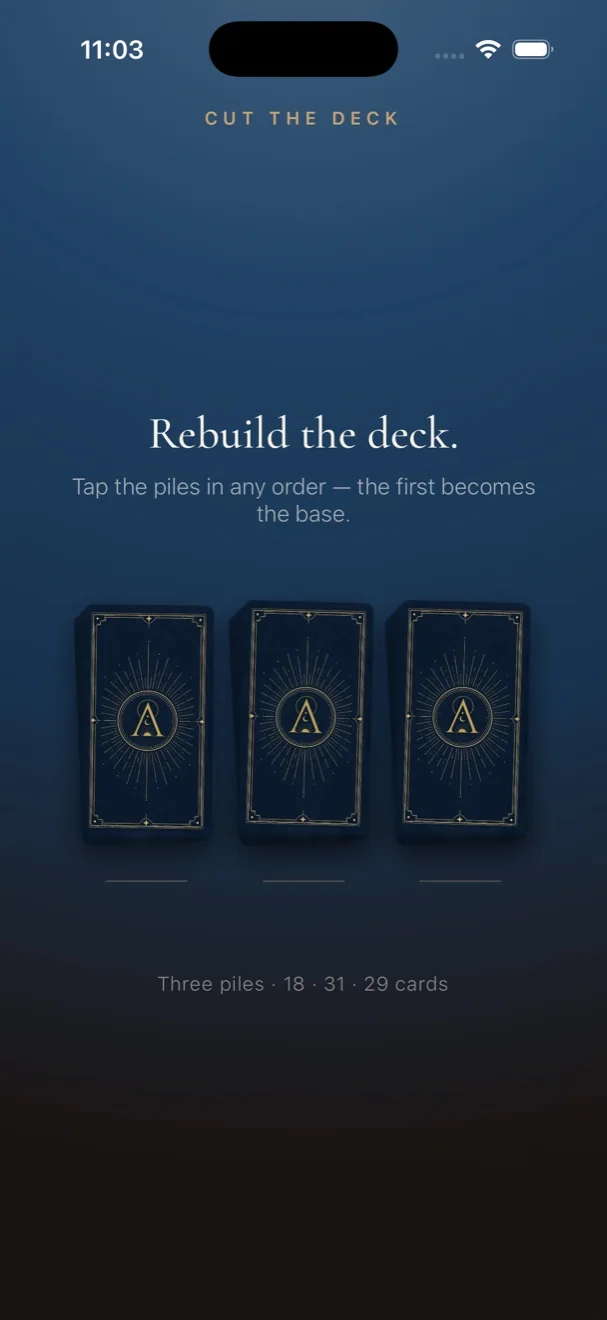
The sequence gives each decision a visible place. A user chooses a spread, cuts the deck with two markers, restacks three piles in their chosen order, then draws and reveals the cards before reading the interpretation.
Safety language keeps the experience reflective and avoids deterministic promises. Journal content stays private and the product does not present a reading as professional or mental-health advice.
04 / Making 78 cards feel like one deck
Making 78 cards feel like one deck
Neil created the deck through a consistency-led prompting and generation process, rather than treating each card as an isolated image.
The task was to hold a shared visual grammar across 78 different scenes while preserving the symbolism and identity of each card. The finished deck is then treated as a protected product asset: full-bleed, uncropped and consistently framed throughout the ritual, deck library, readings, widget and exports.
The deck, up close
Twelve finished cards from the 78-card app deck: four Major Arcana designs and two from each Minor Arcana suit. Numbered and court cards sit together to show how the shared illustration treatment, cream title panel and gold details hold across very different scenes.












05 / What Neil built
What Neil built
Arcanova is a native SwiftUI product with five spreads, a deterministic seedable deck engine, journal and history, daily card, deck reference, notifications, a widget and phone-format PDF sharing.
The free layer is rules-based and works on-device, so a complete reading never depends on a network call. Optional paid Insight readings use structured output and run through a server-side proxy, which keeps the provider key out of the app. Neil’s role covered product definition, the generated artwork, experience architecture, interaction design and native implementation.
06 / What this demonstrates
Arcanova shows experience architecture across a long interaction: consistency-led generated artwork, a clear ritual, a reusable content system, a deterministic offline core and a separately bounded AI narrative layer.
Next step