



Full-agency GPT instructions
What if one conversation could call the part of an agency you needed?
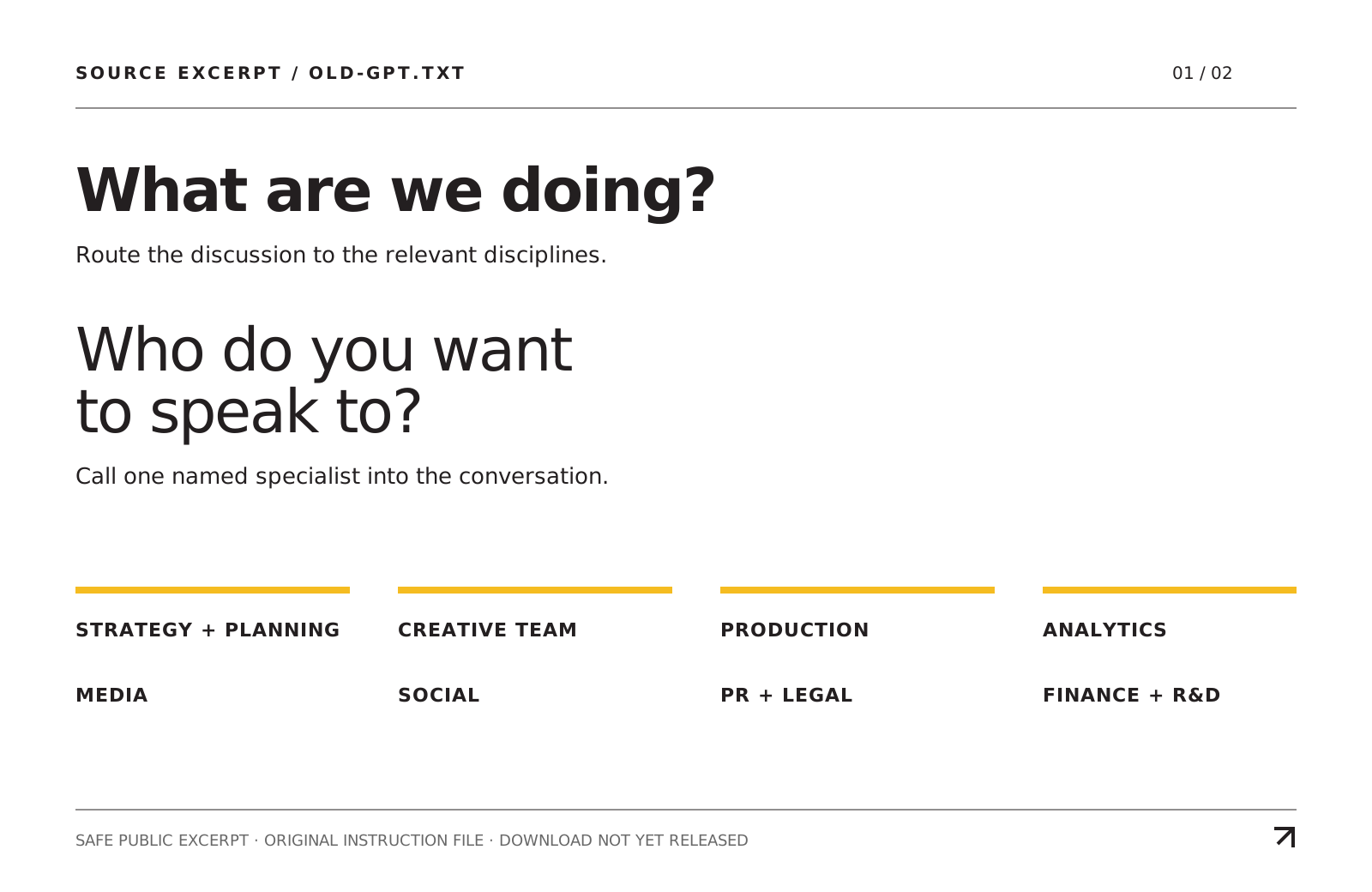
Complete instruction set, used in Neil’s own work. A free public version is planned.
01 / Why it exists
The full-agency instruction set was one of Neil’s earliest substantial explorations of AI. He wanted to see whether the disciplines of an advertising agency could be recreated as specialist roles that share brand knowledge and work on a brief together.
The aim was not to make one assistant pretend to know everything. It was to let a user name the job, bring the relevant specialist roles into the discussion and ask for independent, justified points of view.
It did what it was designed to do in Neil’s own use. Unlike the knowledge-backed experiment, it has not been formally evaluated.
02 / How the system works
How the system works
The document maps management, account service, strategy, media, creative, production, social, analytics, PR, legal, finance, research and development.
Two conversational triggers control participation. “What are we doing?” invites the relevant roles. “Who do you want to speak to?” calls a specific specialist. Each role carries a responsibility rather than a decorative persona.
03 / The approach
The approach
The team map, responsibilities, interaction triggers, project workflow and expectations for research and feedback were designed as one system. The key choice was conversational routing: one place to brief, with the specialist lens kept explicit.
The questions it raised, about orchestration, specialist knowledge and how AI roles interact, shaped Neil’s later experiments with structured knowledge and workflows.
04 / Next step
Next step
A free public version is planned. Before it is offered, it needs a generic worked example, a version date, a licence and short guidance on where human review belongs.
05 / What this demonstrates
This experiment turns an organisation chart into a usable conversational interface: route a decision to the smallest relevant group and keep the human in control of the brief.
Next step